
Coastal recycle yard
Durban Recycle Bars
Blow bar alloy swap after rebar-heavy weeks.
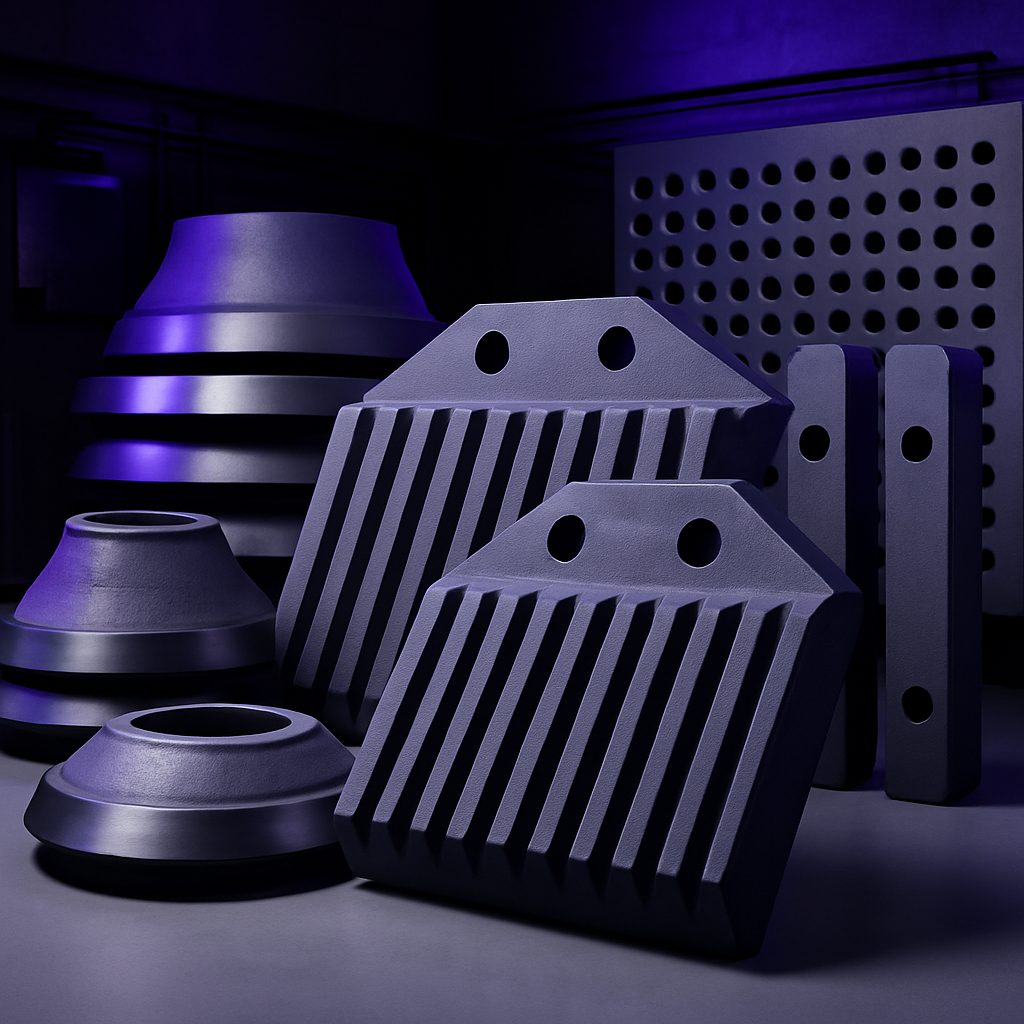
Browse related plant guides and parts. If your plant looks similar, send us photos of the worn parts and we will match the profile.
High rebar content challenges in Durban humidity
A coastal recycle yard in Durban was processing a run of C&D (construction and demolition) feed loaded with rebar. The plant’s impact crusher was running with standard high-chrome iron blow bars suitable for general recycling, but the rebar content was higher than usual for several consecutive weeks. These feeders were under pressure, as tramp metal had caused multiple shutdowns for bar jamming and breakages. The coastal Durban humidity added to the challenge, with sticky fines binding around the rebar and increasing wear on the working faces of the blow bars.
- Frequent bar jamming in crusher rotor
- High wear on blow bars’ leading edge
- Forced shutdowns for blow bar changes
- Material carryback due to humidity
Switching to martensitic-ceramic blow bars
After assessing the feed and discussing options, we recommended a swap to martensitic steel blow bars with ceramic inserts. These offer better resistance to impact and rebar strike compared to straight high-chrome. The plant ran down to a planned stop, locked out the crusher, and we supplied pre-balanced martensitic-ceramic bars, with the correct set of new liner bolts. The team checked the rotor condition, removed the worn bars, cleaned all mating surfaces, and fitted the new bars using proper torque as per the OEM manual. Care was taken to check lifting lugs and safe lifting, as well as to inspect the blow bar wedges. The team also replaced the backing compound where required and ensured even feed distribution before restart.
- Supplied martensitic-ceramic bars and liner bolts
- Emphasised clean seats and correct torque
- Inspected rotor and blow bar wedges
- Used OEM-recommended safe lifting methods
Ongoing wear profiling and lessons for heavy rebar
Following the change, the plant team kept up weekly visual inspections, logging any strike damage or abnormal wear on the bar faces, and tracked tonnages to watch for campaign end. They also monitored the closed side setting and checked for proper rotor balance after maintenance. If rebar volumes spike again, we would suggest planning a stock buffer of both martensitic-ceramic and standard bars, and possibly adjusting the crushing chamber profile for optimal feed presentation. Continuous collaboration and feedback help us support future swaps quickly and safely.
For any technical queries or to organise a site visit, reach our parts team through our contact form.
- Weekly wear checks and logs
- Rotor balance checked after swap
- Monitor closed side setting against wear
- Plan buffer stock for alloy swaps in rebar-heavy periods
What our Crusher Wear Parts customers say
Verified Google reviews