
North West ROM
Rustenburg Hopper Liners
Hopper first, chamber second on a mining feed line.
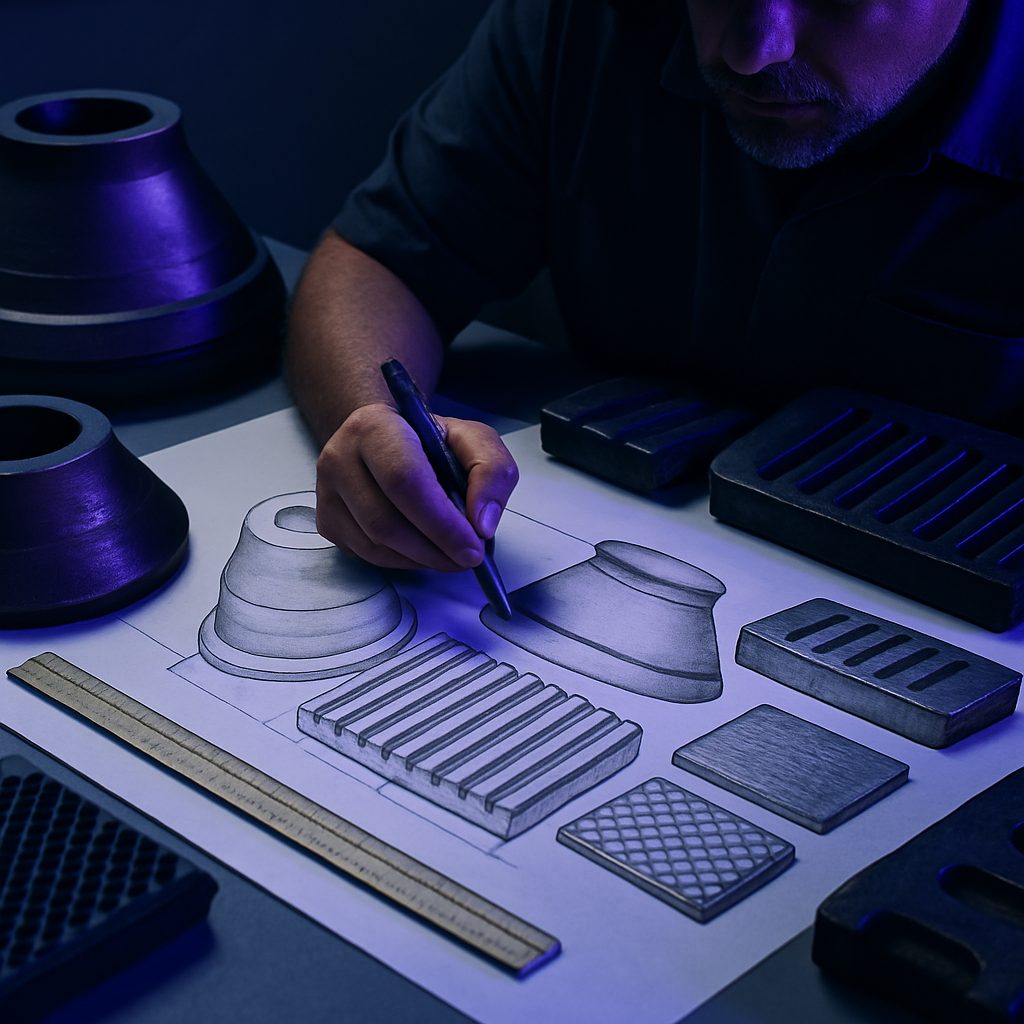
Browse related plant guides and parts. If your plant looks similar, send us photos of the worn parts and we will match the profile.
Tackling hopper wear on north West ROM line
The mine’s front end was taking a pounding as high-abrasion run-of-mine ore poured through the main feed hopper. The steelwork was wearing through quicker than planned, with material flow creating grooves along the impact zones. Frequent downtime for patching and welding slowed production, and each inspection showed more scoring and, in some cases, loose fixings. The site team needed a tougher liner solution to match the ore’s high quartzite content and cut down on unplanned stoppages.
- Ore with sharp-edged quartz
- Hopper repairs needed every few weeks
- Lost time for welding and patching
Supplying and installing custom polyurethane liners
We supplied a set of heavy-duty bolt-in polyurethane liners custom cut for the main impact faces and flow channel of the ROM hopper. We worked with the plant maintenance crew, swapping out the damaged steel sheets and using existing lifting lugs to position the new liners safely. Each panel was profiled to fit the site’s hopper geometry, with apertures pre-cut for liner bolts and countersunk to avoid hang-ups. Torque on the fasteners was confirmed with a calibrated wrench, following the OEM recommended sequence and values.
The liners were fitted during a planned shutdown, with full lockout in place. We checked for feed alignment before sign-off to avoid misfeeds and uneven wear. The longer-life polyurethane coped well with the abrasive fines and cushioned larger lumps, improving both liner life and feed consistency down the line.
- Polyurethane chosen for abrasion and impact
- Bolt-in design for easier change-out
- Safe lifting and correct torque followed
Ongoing wear monitoring and lessons learned
Since installation, the site maintenance team has stuck to a regular wear profiling routine, checking liner thickness with calipers and keeping records for each campaign. They also keep an eye on fastener torque and liner movement, tightening bolts as needed to avoid vibration loosening. With the hopper sorted, focus has moved downline to the primary chamber, where wear life data is now being logged for future liner planning.
If we took on a similar project again, we would suggest a full feed mapping exercise first to identify dead spots or high velocity impact zones, which could allow for tailored liner thicknesses or reinforced backing in the heaviest-hit areas. Early detection of bulk flow issues can help maximise both liner life and hopper uptime.
- Routine caliper checks on liner wear
- Torque re-checks after every blast
- Data logging for future planning
What our Crusher Wear Parts customers say
Verified Google reviews