
Monday Standup Sheet
Short standup sheet that fits a wear week.
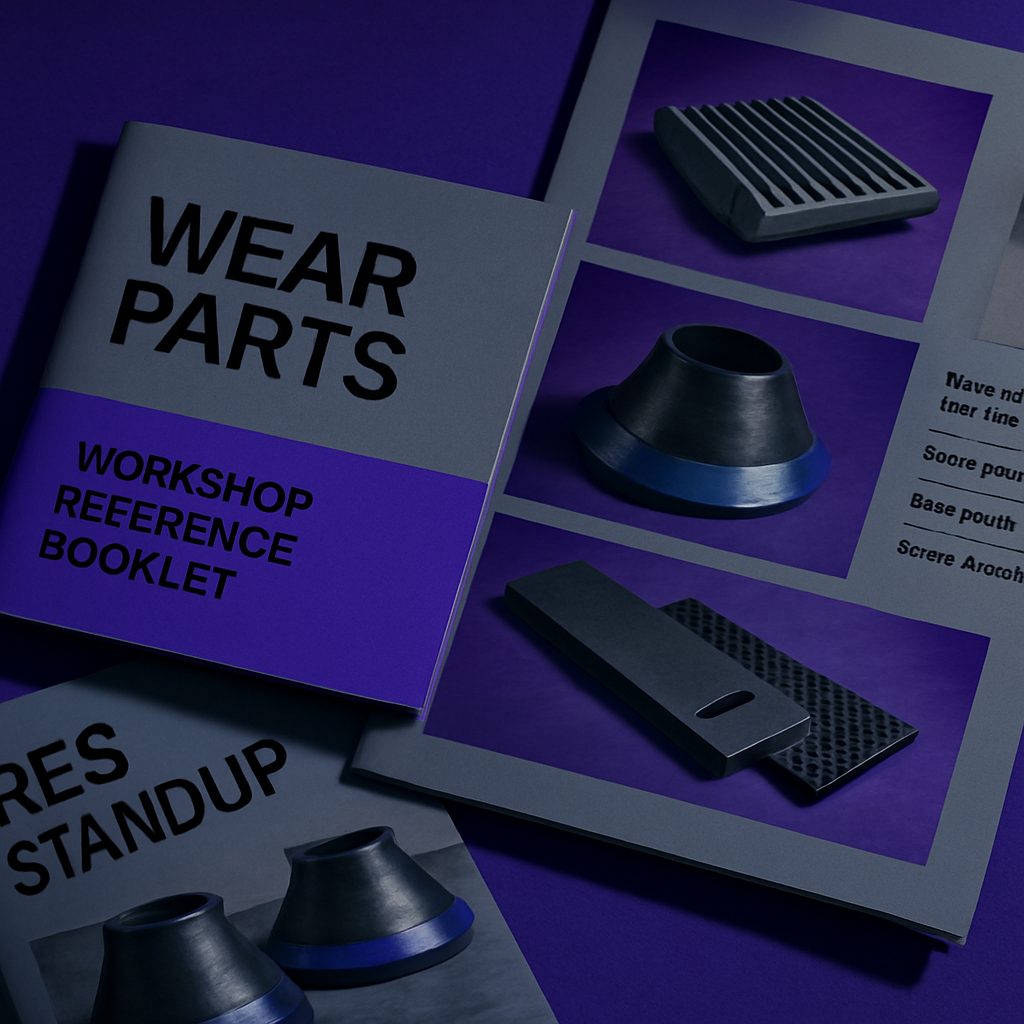
What the Monday standup sheet is for
The Monday Standup Sheet is a practical, printable resource designed for shift supervisors, maintenance teams or foremen at quarries, mines, contract crushing sites and sand plants. It helps anyone responsible for checking and recording crusher and screen wear at the start of the week. The aim is to make sure everyone is aware of liner condition, planned changes and any issues that could affect production or safety during the week. Fill it in on site with a pen or pencil during your Monday toolbox or pre-start meeting.
How to fill in each field
The sheet is structured for a single machine per page, so details stay clear and easy to action. Double-check measurements and observations with another team member where possible. Refer to your OEM manual for any technical queries.
- Machine and location: E.g. Sandvik CH430, Secondary, Bay 2.
- Date and shift: Write the current date and day or night shift.
- Liner or part type: Jaw plate, mantle, blow bar, screen deck etc.
- Closed side setting (CSS) or aperture: Record measured CSS or screen aperture in millimetres.
- Wear thickness left: Use callipers or ultrasonic gauge if available. Write in millimetres.
- Feed condition: Note oversize, fines, poor distribution or uneven wear.
- Visible cracks, looseness or missing bolts: Quick check for safety hazards.
- Next planned change: Estimate days or tonnes to replacement.
- Special notes: Backing compound, torque checks, Eskom power cuts, weather (e.g. Durban humidity, Cape southeaster), spares needed.
Using the sheet over a liner campaign
Plants keep a file of completed Monday Standup Sheets to track wear trends, spot sudden changes and improve planning for liner changeouts or screen deck maintenance. Reviewing these sheets week by week helps teams manage stock holding, order spares timeously and adjust campaigns as needed for feed changes or unexpected Eskom outages. It also helps identify common issues like poor nip angle or uneven feed, so maintenance can be targeted before a problem shuts down the plant. For the latest PDF version of the sheet, use our contact form.