Wear note
Highveld dust on bolts
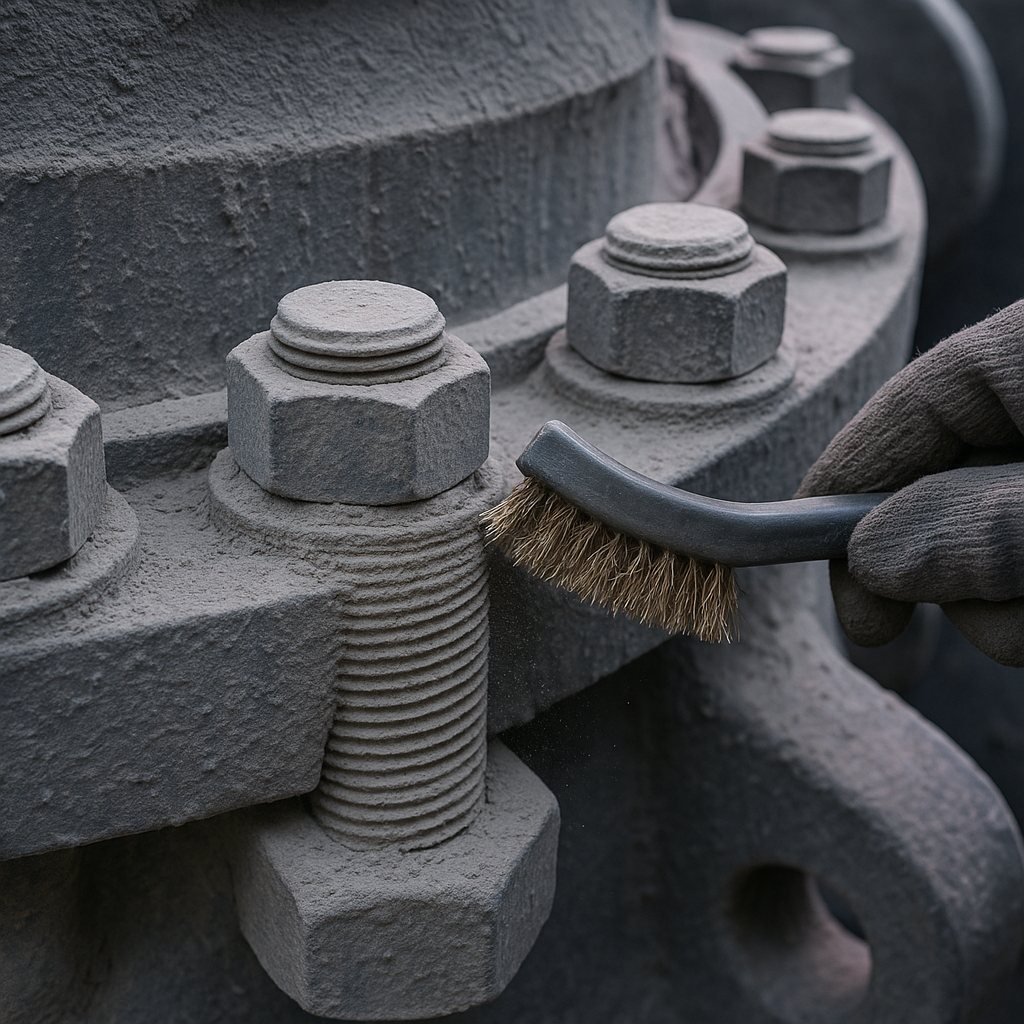
Dust packed threads fake torque. Clean before you claim the liner is seated.
By Ms Amina Hassan, Impact and recycle specialist

Ms Amina Hassan supports demolition and recycling yards with practical guidance on blow bar alloys and wear part selection for impact crushers.
AuthorWhy this matters on the plant
On the Highveld, fine dust gets everywhere, including into the threads of mantle bolts. I have seen more than one plant battle false torque readings, only to blame the liner seating when the real culprit was dust packed deep in the threads.
Dust hides in thread valleys
Highveld dust is aggressive. It’s not just a surface nuisance: on a gyratory, it packs itself into the valleys of bolt threads and underneath bolt heads. Even with a quick wipe, you’ll miss what’s wedged in tight. When you wind up the torque wrench, it can feel like you’ve hit the right value, but all you’ve really done is crush dust. This gives a false sense of security, the mantle liner is not genuinely pulled down, and you are risking movement once the mantle starts to work harden.
I’ve found that especially after shutdowns, when the sun bakes everything and dust storms have been blowing, thread contamination is worse. Plant teams sometimes rush liner swaps to beat Eskom power cuts, but taking shortcuts here is risky.
Proper cleaning prevents fake torque
You can’t rely on a visual inspection alone. Use compressed air plus a stiff nylon brush to clean all threads thoroughly, both on the bolts and inside the tapped holes. If you don’t get the threads shiny, you’re not ready for torque. Wipe down the contact surfaces too, including the underside of bolt heads and seating faces on the mantle.
I prefer to check each bolt by hand, spinning it all the way in before the actual install. If you feel any resistance, clean again. Do not use greases or anti-seize compounds unless the OEM procedure specifically allows it, as the change in thread friction alters the torque-tension relationship.
- Blow out threads with compressed air
- Scrub with nylon brush until shiny
- Double-check bolt runs smoothly all the way in
- Clean bolt head seating face
- Follow only OEM torque and lubrication guidance
Torque readings demand clean threads
A torque wrench is only as honest as the surface it works on. If the thread friction changes due to dust, you may hit your specified torque value long before achieving the prescribed stretch or tension on the bolt. This is especially risky with heavy mantles, some of ours range from 180 to 420 kg, where a fake-seated liner can shift under load, damaging both the mantle and the seating face on the mainshaft.
We have seen plants on the Highveld report 'seating issues' and try up-torquing, but the liner never truly settles. Instead, galling or even bolt failure can occur, all because dust changed the torque-tension equation.
Double-check before you claim a seating issue
Before blaming the liner or the casting profile, revisit your bolting process. After cleaning and before final tightening, make sure every liner sits flush in the crushing chamber. Check for rocking or gaps by hand or with feeler gauges, don’t just rely on the torque wrench.
Always record which bolts were cleaned and torqued, and make it part of your shutdown campaign planning. In Highveld conditions, assume dust is present even on new bolts straight from the store. We keep spares in sealed containers at Sunnyrock for exactly this reason, but even then, check before use.
- Feel for liner movement after initial nip-up
- Check for visible gaps or rocking
- Document each torque pass in your shutdown log
- Use sealed spares when possible
Related parts: Gyratory Mantle. You can also browse all parts and plant guides.
What our Crusher Wear Parts customers say
Verified Google reviews