Plant
Demolition Recycle Yard
Concrete and brick recycle yards that punish soft alloys.
Parts for this plant
See our wear notes and printable resources for planning liner changes.
Setting up a demolition recycle yard circuit
A typical demolition recycle yard in South Africa is built around a mobile or semi-mobile circuit that turns reinforced concrete, brick, and masonry rubble into graded sub-base, G5 and G6, or crusher sand. Feed usually arrives in bulk, often by bakkie or tipper, and passes through a grizzly or pre-screen before entering a primary jaw crusher. Fines and smaller fragments are scalped off to reduce load on the jaws. The jaw product is then processed through an impactor or secondary crusher, which handles rebar and other tramp material if equipped with the right blow bars and liner set-up. Closed-circuit screens separate out final products and recirculate oversize.
Wear concentration in recycle circuits
Demolition recycle yards are notorious for aggressive, unpredictable wear. Steel fragments, rebar, and abrasive fines embed themselves into soft alloys, especially in jaw plates and the leading edges of blow bars. Jaw crushers experience accelerated wear at the bottom quarter of the swing plate and along the fixed plate’s centre, due to repeated impact and poor feed distribution. Impactors running hard feed and tramp metal see the outer ends and top faces of blow bars wearing fastest, while the anvil and apron liners take hammer blows from poorly sorted material. Wear buttons are often welded onto high-wear zones, especially on hoppers and chutes, to buy more time between planned changeouts.
Key wear parts for the demolition recycle yard
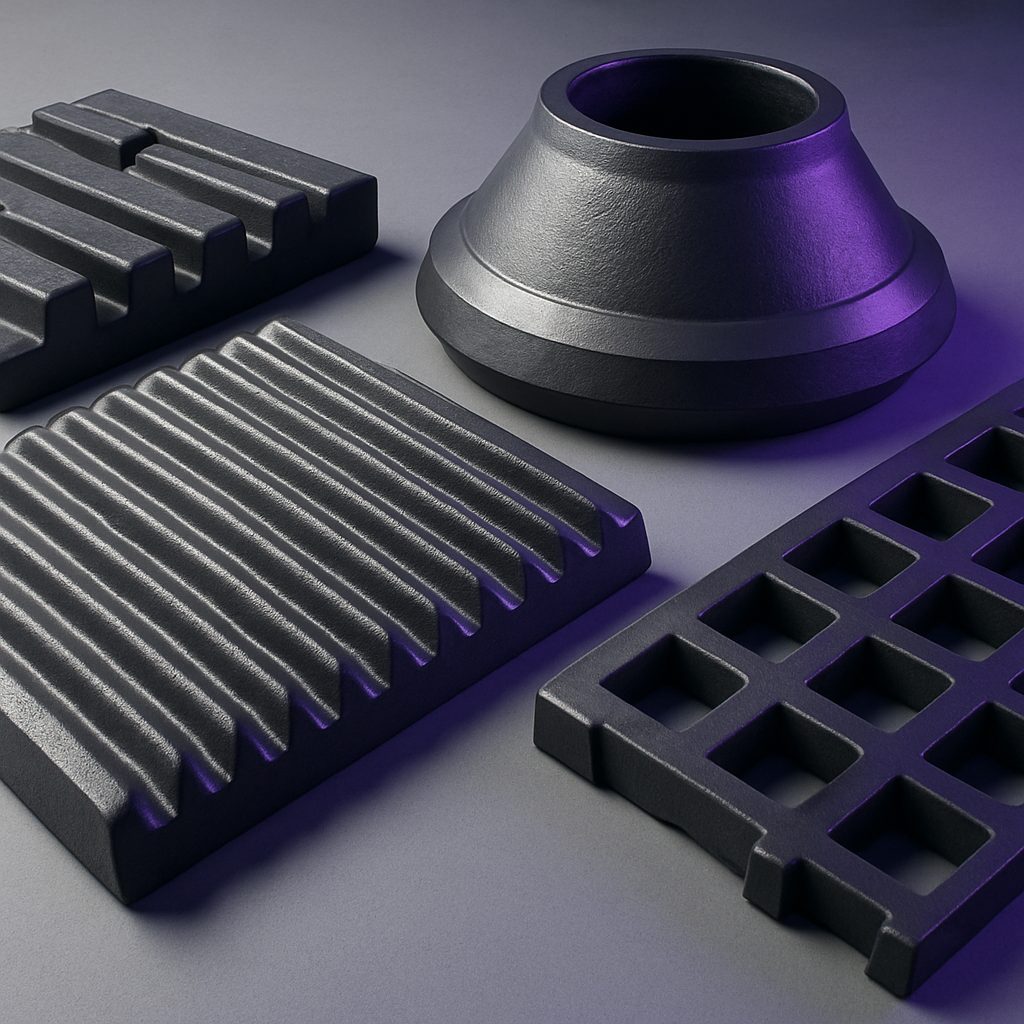
We supply a hard-wearing set of parts for tough conditions in demolition recycling. The Blow Bar Kit includes martensitic or chrome iron bars, often with ceramic inserts to handle both abrasion and impact, plus locking wedges and shims for secure fitment. Jaw Plate Sets come in work-hardening austenitic manganese for maximum resistance to gouging and work harden under high load. These sets include swing and fixed plates, cheek plates, and backing compound for proper seating. Wear Button Packs are designed for quick field repair, welded onto high-impact areas like chutes, hoppers, and conveyor transfers, slowing down the wear rate where liners alone can’t keep up. All parts are compatible with OEM profile and come with lifting lugs for safe changeout.
- Martensitic and chrome iron blow bars with ceramic inserts
- Work-hardening manganese jaw plates and cheek plates
- Wear buttons for hopper and chute patches
- Backing compound included in jaw sets
- Lifting lugs for safe part handling
Planning changes and stock around production and power cuts
Changeouts need careful planning to avoid downtime, especially during Eskom power cuts common in the Highveld and coastal cities like Durban and Gqeberha. Track performance by wear profiling jaw plates and blow bars at regular intervals. Schedule liner changes during planned plant stops or quiet periods, not during high production runs. Hold enough Blow Bar Kits, Jaw Plate Sets, and Wear Button Packs on site to cover at least one full liner campaign, plus spares for unexpected tramp events or misfeeds. Use correct torque on liner bolts, and consult the OEM manual for any critical fastener values. Always lock out the circuit before any part removal or fitment, and use proper lifting gear on all parts with lugs. Stock planning should account for Eskom outages, ensuring you have enough spares to avoid emergency downtime when the power returns and production restarts.
What our Crusher Wear Parts customers say
Verified Google reviews