Plant
Finish Deck Plant
Finish screens after tertiary that sell the product grading.
Parts for this plant
See our wear notes and printable resources for planning liner changes.
Setup for accurate final product grading
Finish deck plants come into play after the tertiary crushers, ensuring your product gets its final grading before going to market. These plants typically run two to three screens, each with selected apertures to separate fines, mids and overs to tight specifications. On the Highveld, you’ll often see triple deck configurations with polyurethane or high-tensile wire mesh, depending on the abrasiveness and size of your product.
Feed arrives well liberated from the tertiary circuit, but distribution and choke feeding remain crucial. Even, controlled feed across the screen width improves separation efficiency and reduces uneven wear. In the humid Durban climate, sticky product may blind apertures, so operators often favour self-cleaning mesh or larger aperture polyurethane. On the Cape flats, the southeaster can dry out feed, which may help reduce blinding but can increase dust.
Where and why finish decks wear
Wear on finish screens is mostly localised at the feed end, where the highest velocity and impact occur as material drops from the tertiary discharge conveyor. Here, fine material can act almost like a blasting medium, accelerating the abrasion, especially on the leading edge of each screen panel. Wire mesh tends to stretch and fatigue at the crown bars, while polyurethane can develop localised pitting and tearing, especially under sharp, hard aggregates typical of Karoo dolerite.
Side tension rails, crown bars, and fixing bolts are also subject to stress cycles as the plant vibrates. Poor screen tension can lead to panel movement, resulting in pegging, increased noise and further wear. Over time, the change in aperture due to wear can shift grading out of spec.
Screen Media Kit parts and their roles
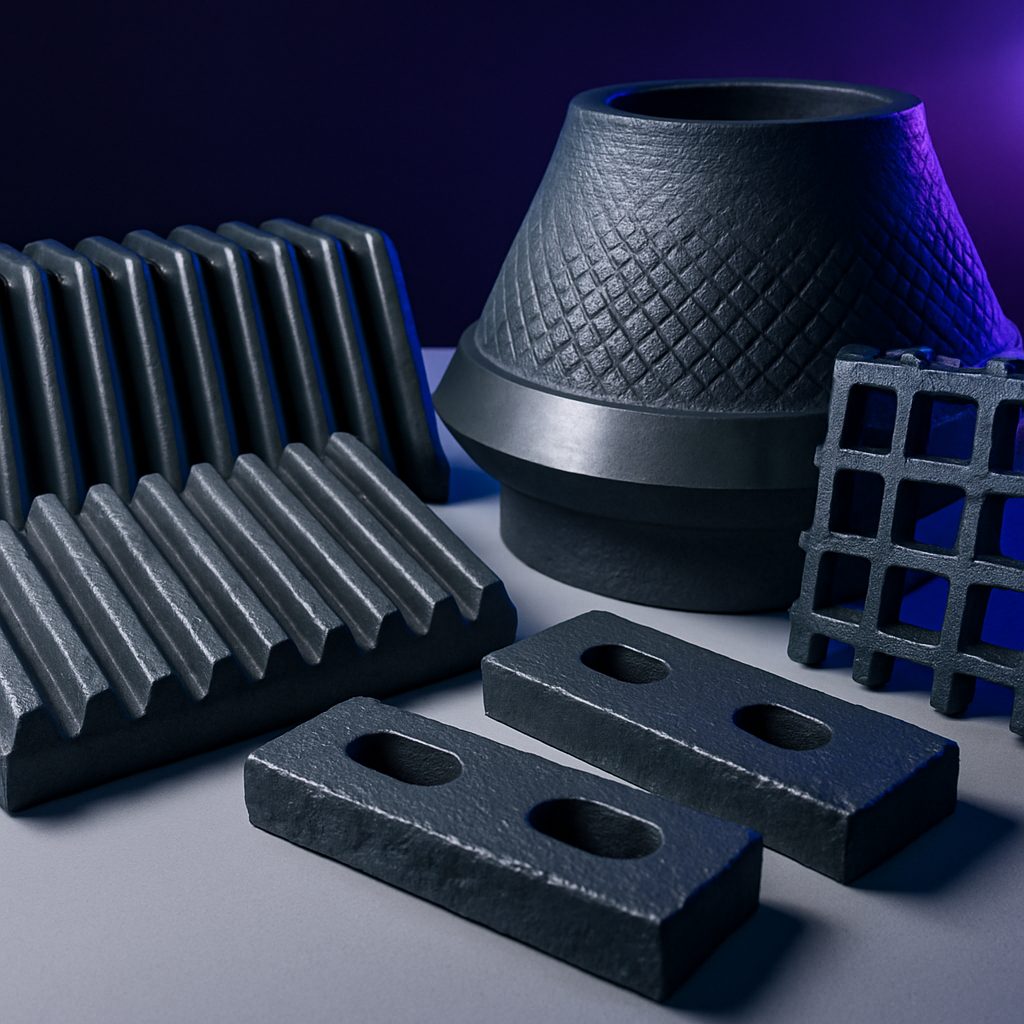
For finish deck screens, we supply comprehensive Screen Media Kits. Each kit includes screen panels (polyurethane, high-tensile woven wire, or self-cleaning mesh options), side clamp rails, crown bar rubber, tension bolts and washers, and often modular fixing elements for quick panel swaps.
Screen panels are the workhorse: polyurethane suits abrasive, wet material and minimises pegging, while wire mesh offers the sharpest cut for dry, non-sticky products. Good crown bar rubber reduces metal-on-metal wear and helps panels bed tightly, ensuring consistent tension. Properly torqued tension bolts and side rails keep everything secure, reducing the risk of panel creep and lost product. All components are selected to match the OEM profile and deck geometry.
- Screen panels (polyurethane or wire mesh)
- Side clamp rails
- Crown bar rubber
- Tension bolts and washers
Planning changes and stock in South African conditions
Liner and screen change planning on a finish deck means tracking tonnes through each deck and monitoring the grading. When you start seeing product drift from spec, check for aperture wear or tension loss. Schedule swaps during natural production breaks or in line with major Eskom power cuts. That way, your crews aren’t standing idle waiting for the lights to come back on.
Keep a running stock of at least one full Screen Media Kit per deck for every two decks in your circuit. In Joburg or the Lowveld, power reliability can affect shift timings, so coordinate stock deliveries ahead of high-demand campaigns. Always use lifting lugs and follow OEM lockout procedures for safe panel swaps. For torque values on tension bolts, use your OEM manual. Contact us through our contact form for planning support or urgent deliveries.
What our Crusher Wear Parts customers say
Verified Google reviews