Plant
Mining ROM Primary
ROM primary gyratory or jaw plants with long campaign planning.
Parts for this plant
See our wear notes and printable resources for planning liner changes.
Mining ROM primary circuits and typical output
Mining run-of-mine (ROM) primary plants are the backbone of hard rock operations across the Highveld, Karoo, and beyond. These plants are usually set up with a heavy-duty jaw crusher or a gyratory crusher as the first stage, taking blasted ore straight from the muck pile. The role of this circuit is to reduce large boulders, sometimes over a metre in diameter, to manageable sizes for stockpiling or secondary crushing.
ROM primaries are designed for high throughput, handling feed from 180 to 420 tonnes per hour depending on the crusher type and feed characteristics. The output is typically minus 250 mm, ready for the next crushing stage or direct mill feed. Proper feed distribution into the hopper and choke feeding the chamber are crucial to even wear and steady production, especially when shifting between normal and extended campaigns.
Concentrated wear zones in ROM primary crushers
Gyratory mantles and jaw plate sets are subjected to relentless impact and abrasion. With jaw crushers, the most aggressive wear is on the fixed and swing jaw plates in the lower third, where the nip angle crushes feed against the chamber profile. In gyratory crushers, the lower mantle and bowl liner experience high pressure and sliding abrasion as the material is compressed and released.
Feed hopper liners take the brunt of impact from boulders dumped by haul trucks or bakkies. Uneven feed distribution or a blocked chamber can cause hot spots, accelerating liner wear. Power cuts or sudden shutdowns can harden fines in the chamber, leading to uneven wear or packing when the plant restarts.
- Lower mantle and jaw plate zones wear fastest
- Hopper liner wear spikes with oversized feed
- Power interruptions lead to compacted fines
- Improper feed can cause localised abrasion
Critical wear parts for ROM primary duty
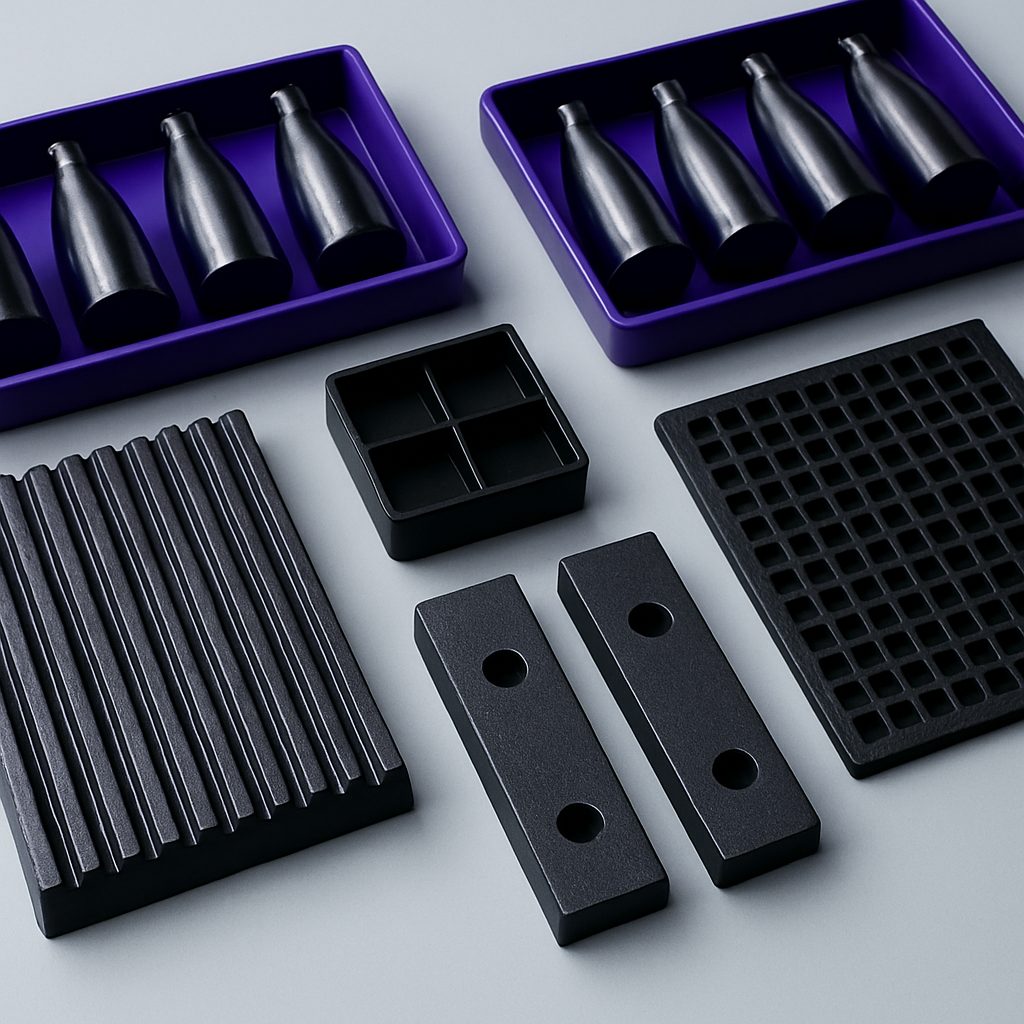
We supply OEM-profile gyratory mantles, jaw plate sets, and heavy-duty feed hopper liners built for African mining conditions. Our gyratory mantles are cast in austenitic manganese, work hardening under impact to resist gouging. Jaw plate sets for primaries are supplied with deep profiles and correct nip geometry for both bite and longevity.
Feed hopper liners are supplied in abrasion-resistant steel or custom poly-backed plates for stickier, clay-rich feeds. All liners are supplied with correct lifting lugs for safe installation. We also stock liner bolts and recommend using the correct backing compound and torque procedures as per OEM manuals. The liner set must work as a system, protecting the shell, controlling the chamber profile, and ensuring safe crushing force transfer.
Planning liner changes and stock during campaigns and power cuts
Long campaign planning is crucial for ROM primaries. Wear profiling should be done during inspection shutdowns to track mantle and jaw plate life. Keep a minimum stock of full liner sets and fastenings on hand for the next scheduled change, as Eskom power cuts can delay deliveries and extend downtime if stock is not on site.
Organise liner swaps to coincide with planned Eskom outages or low-demand periods. Always lock out the plant, follow safe lifting practices with certified lugs, and never re-use overstressed bolts. Feed hopper liners often wear unevenly, so check and rotate or replace as needed to protect the main chamber. For bulk orders or special profiles, contact us through our contact form so we can align deliveries with your maintenance programme.
What our Crusher Wear Parts customers say
Verified Google reviews