
Plant
Quarry Night Shift
Night crews that need change windows and fuse logic when there is no daylight.
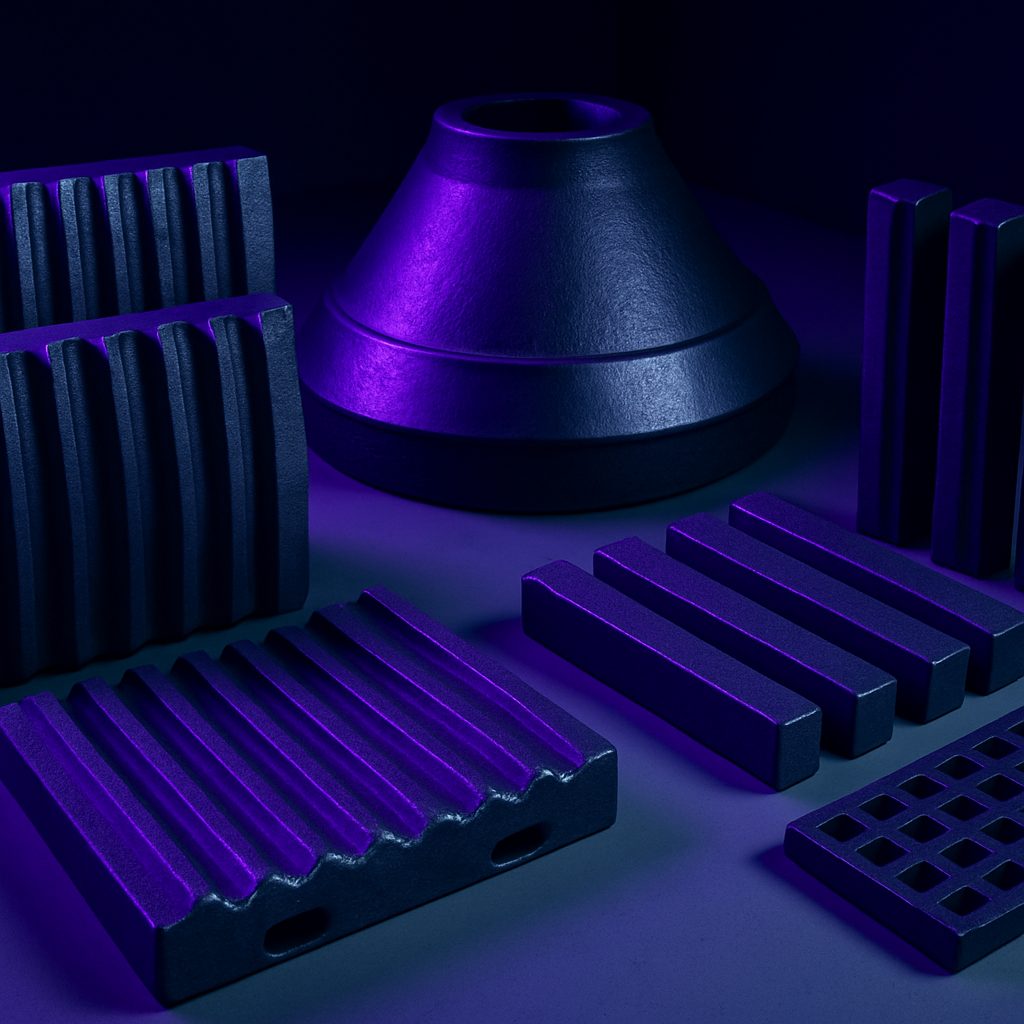
Parts for this plant
See our wear notes and printable resources for planning liner changes.
Night shift quarry circuit setup and output
Night shift circuits in quarries are often run to maximise output with minimal traffic or interference, making full use of Eskom's unpredictable power schedule. Most commonly, these plants feature a primary jaw crusher in a central hopper-fed position, handling run-of-mine granite, dolerite or similar hard rock. Discharge is usually via a conveyor to a surge bin or directly onto a secondary screen or cone, depending on the site layout.
Production focus is on high-volume, reliable throughput. During night operations, crews rely on automated feed systems, camera monitoring and robust lockout routines, since visibility is limited and safety is critical. Output size is typically in the 0 to 40 mm range for roadstone, base material or further secondary reduction, with jaw settings kept consistent to avoid rework between shifts.
Where wear happens on night runs
Night shift material is often more variable as stockpiles are drawn down and feed can include harder pockets and oversize. Wear is highest at the jaw crusher's fixed and swing jaw plates, especially in the lower third where the nip angle and compressive forces are greatest. The toggle plate is a known fuse point against tramp steel, and cheek plates see accelerated abrasion from side-wall fines build-up.
Without daylight, checking for uneven feed is hard, so crews tend to run at steady, high rates, increasing wear at contact points. Misaligned feed or surges can also cause localised chipping or scalloping, especially on the non-drive side. Fine build-up behind cheek plates may go unnoticed until a full change window, further concentrating wear.
Jaw Plate Set, Toggle Plate and cheek plate functions
We carry jaw plate sets, toggle plates and cheek plate pairs specifically for night shift quarry duty. The jaw plate set, typically in austenitic manganese, provides the main crushing surface, work hardening under repeated impact for longer life. Correct closed side setting and nip angle are essential for both throughput and minimising premature wear.
Our toggle plates are designed to act as mechanical fuses, fracturing first if tramp metal enters the chamber, preventing costly damage to the pitman and toggle seats. The cheek plates, usually supplied in abrasion-resistant steel, protect the crusher’s sidewalls and prevent fines from gouging the jaw frame. All components are delivered with correct lifting lugs and mounting holes. Always follow OEM torque specifications for liner bolts and ensure safe lockout before any change.
- Jaw plate set: main wear surface, work hardens under impact
- Toggle plate: breaks to prevent pitman or frame damage
- Cheek plate pair: protects sidewalls, minimises frame wear
Planning liner changes and stock for power cuts
Effective campaign planning for night shift liner changes needs to factor in both production demand and the reality of Eskom power cuts. Keep a rolling inventory of jaw plate sets, toggles and cheek plates on-site, ideally at least one full set per crusher, to cover unforeseen breakages during night operations. Use scheduled change windows in low-output periods, and avoid mid-shift swaps whenever possible.
Monitor wear profiles after each change using a simple template or caliper. Document liner wear trends against tonnage moved, so you can anticipate the next change and avoid emergency stops. Ensure all parts are staged near the crusher, with correct tools and lifting gear ready. If a power cut is likely, align your change window with known outage periods to maximise downtime efficiency. For technical advice, or to organise a parts drop-off by bakkie to your site, contact us through our contact form.
What our Crusher Wear Parts customers say
Verified Google reviews