Wear note
Cheek plate change windows
Cheeks scar frames when change windows slip past the last safe photo.
By Ms Lerato Dlamini, Wear notes lead

Ms Lerato Dlamini leads wear notes at Crusher Consumables, giving plant leads practical advice on tackling tough, abrasive feeds that hammer crusher parts.
AuthorWhy this matters on the plant
Cheek plates are often left until the very last minute in busy crusher maintenance. I have seen far too many crusher frames in Joburg and the Lowveld take unnecessary damage when teams push cheek plate change windows beyond the safe limit.
Recognising the true change window
Every crusher operator knows that cheek plates, unlike jaw plates, don't see direct crushing action but rather protect the frame from abrasive fines and liner movement. The window for changing cheeks is not just about visible wear to the steel but about the margin before the base frame is exposed. I've walked plants where operators wait until the manganese is razor thin and then scramble, not realising that by this point, the wear pattern is no longer uniform and the frame is already getting scarred.
To avoid this, we recommend checking cheek plate thickness at scheduled shut windows, not just visually but with a thickness gauge. OEM profiles typically start at 30 to 60 mm. Once any area wears down to 8 to 12 mm, depending on the crusher and OEM recommendations, you’re entering the last safe window for change-out. For high-wear sites like Karoo quartzite or Vaal dolerite, check even sooner, especially if feed size is irregular or fines content is high.
Damage from missing the window
Once the cheek plate loses its profile, fines start scouring the underlying crusher frame. This damage can't be 'patched' with a new cheek. It means downtime for welding and grinding, and weld repairs always risk heat distortion and hardening on the frame. In one recent Highveld pit, a single missed change window turned a two-hour cheek replacement into a day-long repair job, all because the last 6 mm of cheek was left to disappear. I've seen similar issues in humid Durban where moisture accelerates rust behind thin cheeks, making bolts seize so removal becomes destructive.
A worn cheek also affects nip angle by letting the jaw plate move. This can tighten the closed side setting without the operator noticing, affecting product size and throughput. These knock-on effects mean running past the safe cheek window is never worth the risk.
Best practice during cheek plate changes
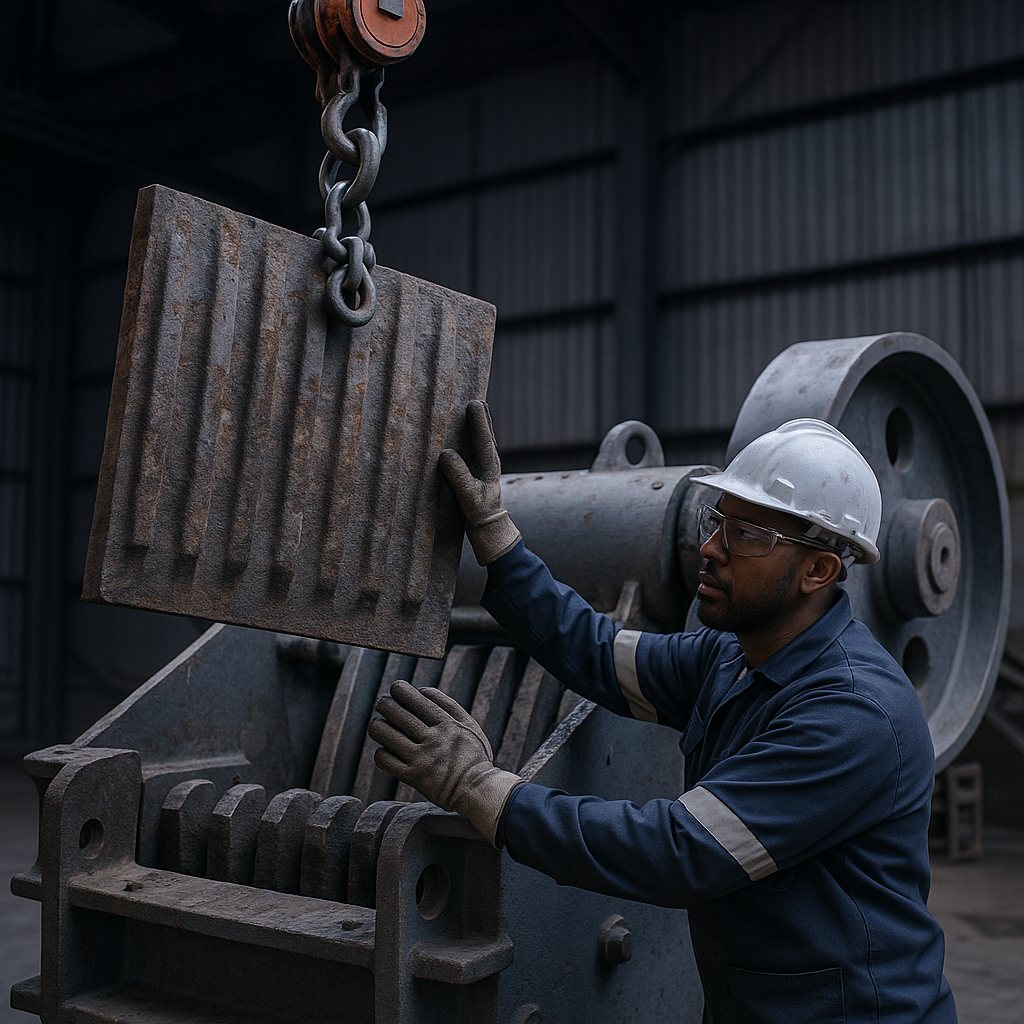
Lockout before any work starts, even during Eskom power cuts, to prevent accidental startup. Use an impact wrench with the correct socket size and always remove liner bolts in a sequence to prevent distortion. For heavy cheek plates, use lifting lugs and certified slings, not bakkie ropes or home-made hooks. If the old plate is jammed, avoid hammering against the frame; use pry bars on the cheek edge and, if necessary, wedge timber to protect the casting.
Clean and inspect the frame surface before fitting a new cheek. Any scoring or pitting should be dressed smooth, and backing compound is not recommended for cheeks. Torque new bolts to the value in the OEM manual. Don’t reuse old bolts as they stretch and risk popping under vibration.
- Measure thickness at 3 to 4 points
- Replace at 8 to 12 mm minimum thickness
- Use lifting lugs for plates over 25 kg
- Dress frame scars before new fitment
Planning and stock holding
South African conditions mean we sometimes wait weeks for parts from outside, so having a cheek plate set on hand is vital. Plan change-outs as a campaign with other jaw parts, like toggles and wedges, to minimise downtime. Track wear with a logbook and photos, not just memory, to see how quickly your conditions eat through cheeks. Cheeks should be stored flat and dry, not stacked against the wall where they can warp or rust.
If you run different feed types, note how each campaign affects cheek life. For clients in the Cape, the southeaster brings in fine silica dust that accelerates wear, so stock accordingly. And for sites alternating between hard stone and recycled material, expect different change windows and inspect more often.
For technical advice or to check if you have the right profile in stock, contact our parts team through our contact form.
Related parts: Cone Mantle Liner. You can also browse all parts and plant guides.
What our Crusher Wear Parts customers say
Verified Google reviews