Wear note
Recycle rebar risks
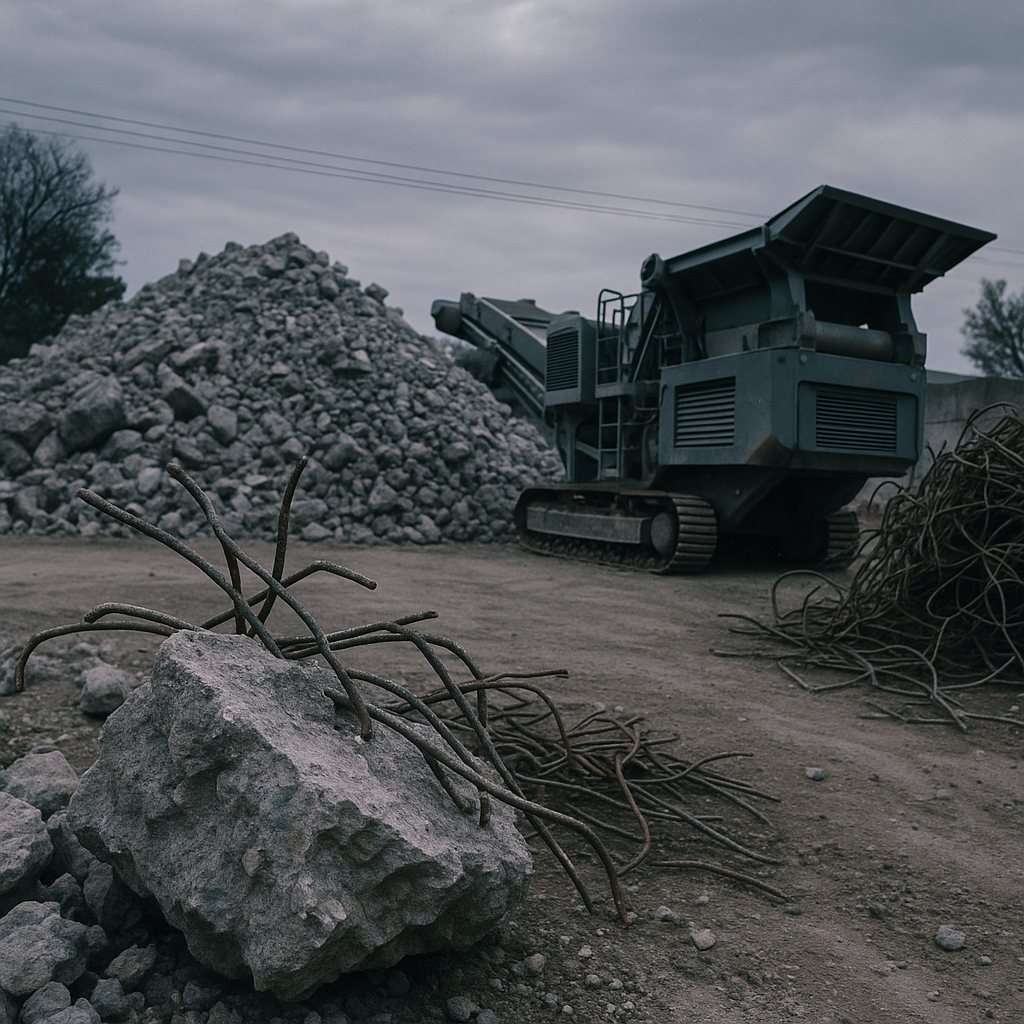
Rebar in demolition feed is why soft alloys disappear.
By Mr Sipho Nkosi, Screen media specialist

Mr Sipho Nkosi is Crusher Consumables’ screen media specialist, making sure the right panels and mats keep scalping and finish decks running cleanly across South Africa’s mining and quarrying sites.
AuthorWhy this matters on the plant
Rebar in demolition rubble is a headache for anyone running a recycling crusher or screen. Soft alloy parts just vanish when you feed in too much steel scrap without thinking through your liner setup.
How rebar chews through standard liners
Most demolition feed in South Africa is concrete with mixed-in steel. The problem is that the high-impact points, where rebar collides with your hopper liners or transfers into the jaw or impactor, will rapidly wear away softer alloys such as mild steel or even basic austenitic manganese if not properly work hardened. We have seen wear panels disappear after less than a week when big sections of rebar get loaded in with a TLB or drop from a bakkie.
The real issue is the shape and hardness mismatch. As rebar bends and flexes through the hopper and feed chute, it gouges, drags and even hooks softer liners, quickly pulling out bolts or tearing the liner itself. Plants that try to use whatever is on hand, like offcut plate or thin mild steel, end up with holes and dangerous jam points. Once that happens, material can short-circuit the crusher, bypassing the feed or blocking the flow.
Liner material choices for harsh feeds
If you are dealing with demolition rubble on the Highveld or in the Durban humidity, the combination of moisture, grit and steel makes this even worse. We always recommend hard-wearing feed hopper liners, either with high-chrome white iron backing or heavy-duty rubber and ceramic composite panels. Polyurethane liners can work for sand and clay, but not when you have bent rebar and mesh in the feed.
We have supplied 500 to 600 Brinell white iron liners to Joburg contract crushers who see heavy rebar every day, and they get far more running hours before needing to swap out panels. The key is to check that your liner bolt torque is up to spec and use proper backing compound to stop movement and vibration.
- Avoid mild steel as a liner where rebar is present
- Check for ceramic or high-chrome white iron inserts
- Inspect liner bolts for signs of movement after first 24 hours
- Deburr rebar before feeding if possible
Feed chute design and rebar presentation
How you load your feed makes a big difference. If the rebar is coming in at odd angles or mixed in solid blocks, it will find the weak spots. We have seen plants in Germiston where chute profiles were too narrow, so long rebar sections jammed, bent out liners and jammed up the crusher. Choke feeding with mixed concrete and steel is risky, but if you must, make sure rebar is broken down as much as possible before it hits the liners.
Good practice is to set up a grizzly or screen deck with wide apertures ahead of the crusher, so you can at least scalp out the biggest lengths and bunched mesh before it gets into the hopper. In the Cape southeaster, wind can blow fines away from the deck, but it is the rebar that does the damage if not caught early.
Inspection, maintenance and safety under Eskom power cuts
When Eskom outages hit and the plant stops mid-cycle, loose or exposed rebar can wedge against liners and cause safety hazards on restart. Always lock out before entering the hopper or chute. In our experience, mid-campaign liner checks are vital, especially after a power cut, as vibrations and sudden stops can loosen liner bolts or expose weak points. Use wear profiling paint or chalk to monitor how fast the steel is wearing.
Have a maintenance programme in place to check liner bolt torque and backing compound every week, and after any jam or restart event. Remember, always defer to your OEM manual for torque values and lifting procedures. If the liner is showing more than 10 mm of wear or has lost its profile, replace it before the next big push.
Related parts: Feed Hopper Liner. You can also browse all parts and plant guides.
What our Crusher Wear Parts customers say
Verified Google reviews