Wear note
Sunnyrock yard rhythm
How our yard picks kits, checks profiles and photographs every order before dispatch.
By Mr Pieter Botha, Cone circuit adviser
Pieter Botha is the go-to adviser on mantle and concave geometry for secondary cone crusher circuits across Gauteng.
AuthorWhy this matters on the plant
Every week at our Sunnyrock yard in Germiston, I watch our flow of concave sets, ready for crushers across the Highveld and beyond. There’s a rhythm to how we pull, check, and prep parts for those who trust us with their wear life, without any fuss or unnecessary noise.
Kit pulling for crusher shutdowns
Pulling a full concave set isn’t just opening a bin and loading a bakkie. We start with the plant’s crushing chamber spec and the closed side setting they run, say, 18 mm for a secondary circuit on aggregate. We’ll check the OEM profile needed, whether they want extra-coarse or intermediate, and organise all segments in the correct sequence.
After years in the field, we’ve seen the headaches when someone mixes up row positions or forgets a key locking nut. We lay out the set, match every piece to the plant’s chamber drawing, and tick off the liner bolts, backing compound, and lifting lugs. These bits are as important as the manganese itself. It’s about making sure every tonne of rock passes through matched parts, not just whatever was closest on the rack.
Photo checks before kit release
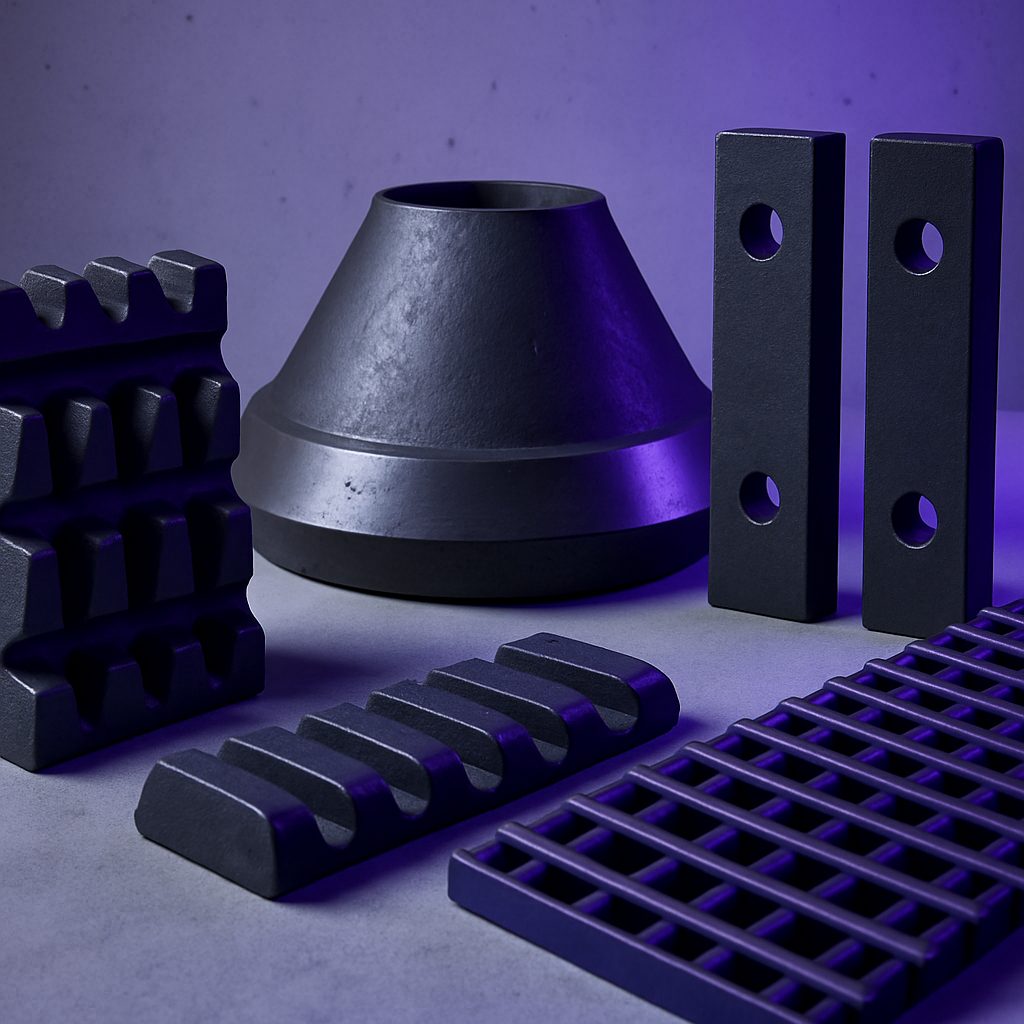
We don’t let any concave set leave Sunnyrock without a proper photo check. I insist on high-angle photos of the full kit, showing segment profiles, seat faces, key slots, and the full set of bolts. This helps the customer confirm what’s ready for their next shut, no surprises when the plant’s down and the clock is ticking.
If there’s a repaired segment or a work-hardened insert showing a different finish, we document that too. Our photos have caught mismatched sets more than once, especially when similar looking profiles get mixed after a busy week. No one wants to discover the wrong concave mid-way through a 12 hour swap on a chilly Joburg morning.
Plant paths and bakkie loading mistakes
Moving heavy concaves from our yard to the plant isn’t just about muscle. We plan the plant path, looking at your crusher’s access, Eskom power cut schedules, and local traffic. A common mistake is underestimating the weight: a standard secondary set can be 180 to 420 kg, needing the right slings and hooks, plus real lifting lugs.
We’ve seen rushed jobs where a set was thrown onto the wrong side of a bakkie, then had to be manhandled at the plant, risking cracks or even a dropped liner. Always check your hoist rating and use your lockout procedures, don’t take shortcuts, especially on wet Gauteng mornings or in the Durban humidity.
- Match each liner’s code to chamber map before loading
- Never lift by bolt holes, use rated lugs only
- Photograph the set as loaded onto the vehicle
- Check torque tools before leaving yard
Keeping the yard rhythm with real plant feedback
We keep the yard rhythm by learning from plant call-backs. If a site struggles with uneven wear or concaves not seating, we map the problem and tweak how we kit the next set. It could be feed distribution, incorrect chamber fit, or an issue with bolt torque. Every bit of site feedback sharpens our next pull.
South African plants run hard, with variable feed and sometimes patchy maintenance. By keeping feedback loops tight, photos, weight checks, part codes, we keep kits flowing out of Sunnyrock and into shutdowns without delay. The real rhythm is in getting the right part, in the right place, at the right time, every time.
Related parts: Concave Set. You can also browse all parts and plant guides.
What our Crusher Wear Parts customers say
Verified Google reviews