Plant
Primary Jaw Quarry
Fixed primary jaw plants that need plate, cheek, and toggle discipline on abrasive Highveld rock.
Parts for this plant
See our wear notes and printable resources for planning liner changes.
Primary jaw plant setup and output
Fixed primary jaw crushers on the Highveld are the backbone of most hard-rock quarries, taking oversize blasted material and reducing it to sub-200 mm for secondary crushing. The circuit typically feeds from a dump hopper or feeder, with the jaw set at a closed side setting anywhere from 120 to 180 mm, depending on downstream requirements. Output is kept steady by choke feeding, keeping the chamber full, and maintaining an even feed size to avoid shock loading and uneven liner wear. These plants are expected to handle high throughputs, often in the 180 to 420 tonne per hour range, producing a consistent run-of-quarry product that feeds directly to cones or screens. The quality of the output depends heavily on nip angle, jaw chamber profile, and keeping the toggle system in good order.
Where wear concentrates in Highveld conditions
Abrasive Highveld rock, with its high quartz and iron content, puts particular pressure on jaw plates and cheek plates. Most wear focuses on the lower third of the swing and fixed jaw plates, right in the crushing zone where the nip angle is sharpest and where material is gripped and compressed. Cheek plates catch the abrasive fines as they migrate to the sides of the chamber. The toggle plate acts as a mechanical fuse, fracturing under tramp metal, but also wears steadily due to frequent power cuts causing uneven throughput and shock loads. Hopper liners take a beating from both the initial impact of boulders and the constant flow of coarse material.
- Jaw plates: most wear at the bottom edge
- Cheek plates: wear at the feed and discharge ends
- Toggle plate: subject to shock and shear
- Hopper liner: gouged by boulder impact
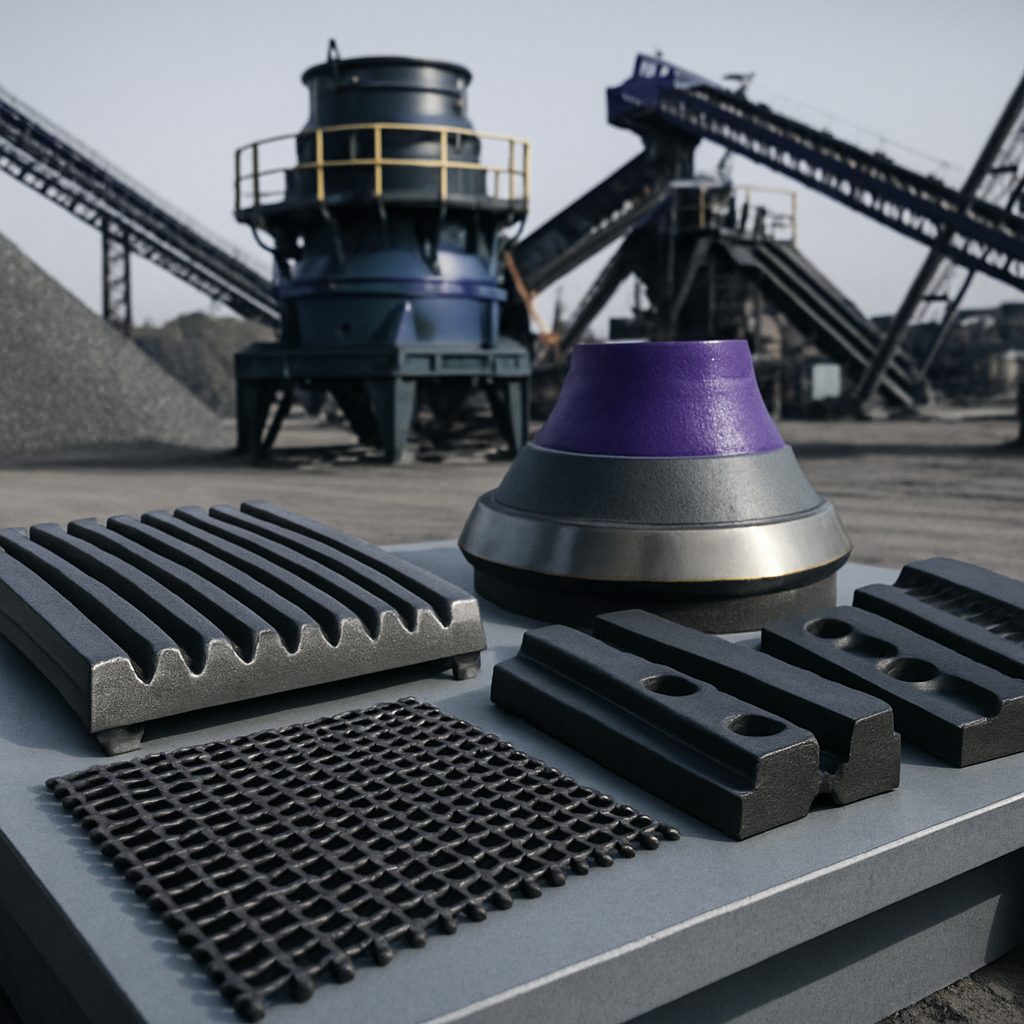
Crusher Consumables parts for primary jaws
We supply a full set of jaw plates, cheek plates, toggle plates, and feed hopper liners, specifically tailored for South African quarry conditions. Jaw plates are cast in austenitic manganese, ready to work harden under impact and pressure, giving lasting life in abrasive duty. Cheek plates resist side wear and manage chamber sealing. The toggle plate, made with controlled brittleness, protects the machine from tramp metal and overload. Hardened feed hopper liners absorb the initial shock and prevent costly wear to the hopper body. All parts are engineered for proper fit with your OEM profile, and we can advise on chamber selection for your material type. Always torque liner bolts to the OEM specification after cleaning and checking contact faces, and use proper lifting lugs for safe installation.
Planning liner changes and stock around production
With Eskom power cuts and variable production, campaign planning is essential for jaw liner and component changes. Monitor wear by measuring pocket depth and nip angle loss: replace jaw plates before they lose tooth profile or risk excessive closed side setting drift. Keep a minimum stock of jaw and cheek plates on site to handle unplanned outages or tramp events. Toggle plates must be checked after every power interruption, as shock loads can cause hidden cracks. Organise liner change-outs for midweek mornings, when bakkie traffic is light and plant staff are fresh. Confirm all tools, liner bolts, backing compound, and safe lifting tackle are ready before locking out the crusher. Use our contact form for lead times or technical advice.
What our Crusher Wear Parts customers say
Verified Google reviews