Plant
Scalping Screen Line
Scalping decks ahead of crushers that save chambers from fines overload.
Parts for this plant
See our wear notes and printable resources for planning liner changes.
Scalping screen circuits protect your crushing chamber
A scalping screen line is set up directly ahead of the primary crusher to strip out fines and undersize before they reach the crushing chamber. Typically, the feed material is dumped into a robust feed hopper, then spread evenly across a high-capacity vibrating scalping deck. By removing fines early, the circuit prevents unnecessary wear on jaw plates or impact blow bars further downstream.
What leaves a scalping screen is split: fines drop through the apertures to stockpiles or secondary circuits while only the oversized, uncrushed rock heads to the primary crusher. This improves crushing efficiency, reduces fuel and energy consumption, and keeps the closed side setting true for longer. The deck configuration, screen tension, and aperture size are all set according to the quarry’s product spec and feed characteristics.
Where wear hits hardest on scalping screens
Scalping decks work hard, especially when handling abrasive quartzite, dolerite, or recycled rubble. The heaviest wear comes from constant impact and vibration, with large rocks tumbling and fines grinding into the media. This is most pronounced at the feed end, where rocks first hit the screen, and around the discharge where material flow is fastest.
Screen media fatigue is accelerated on the Highveld with its dry dust, or along the coast where humidity and salt can corrode steel wires. Hopper liners also take a beating where rocks drop from height, so regular visual checks for gouging, cracking, or loose bolts are a must.
Key parts we supply for scalping decks
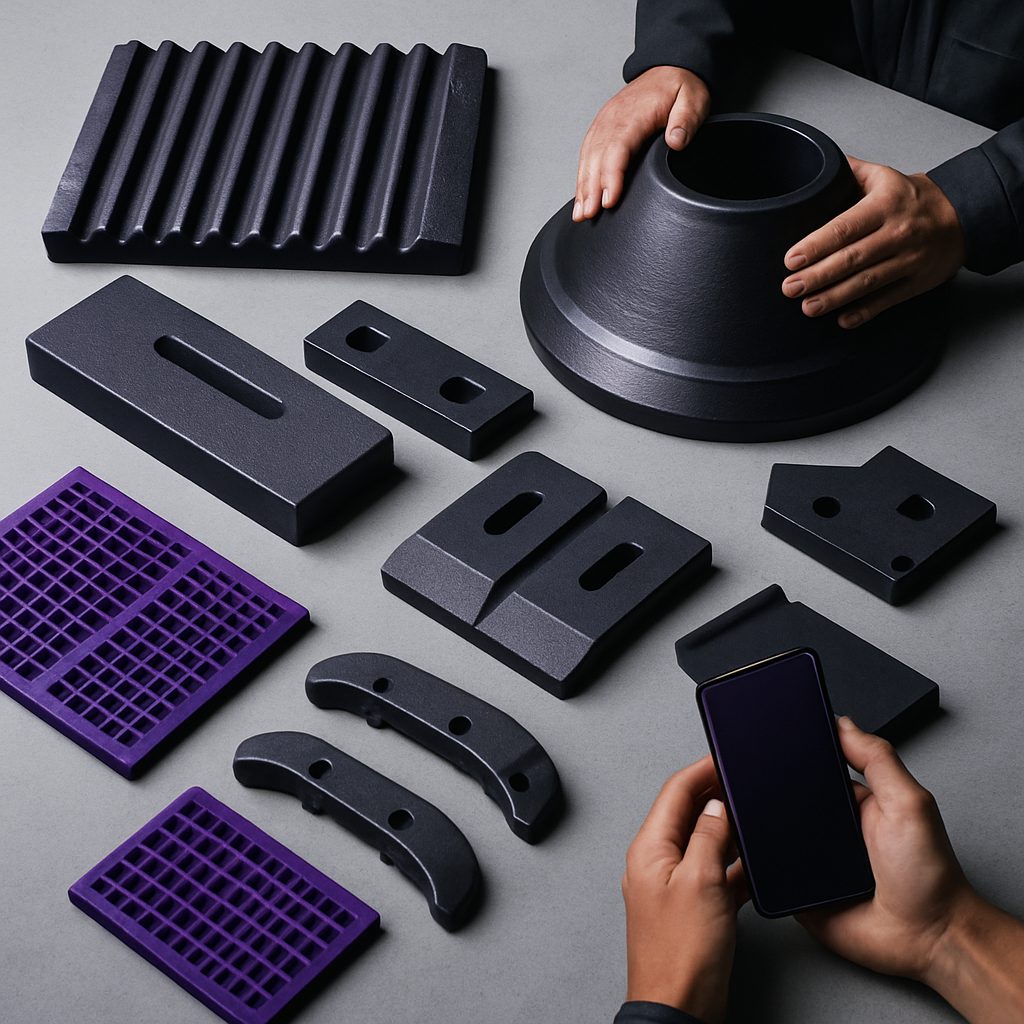
For scalping circuits, we carry two critical wear parts: the Screen Media Kit and the Feed Hopper Liner. Our screen media kits include wire mesh, heavy-duty polyurethane panels, and all necessary tension rails and capping rubber. Each is selected for the right aperture size, open area, and wear life, wire mesh for sharp separation and self-cleaning, poly panels for durability against impact and fines.
Feed hopper liners are available in a range of thicknesses from 12 to 50 mm, in either austenitic manganese or abrasion-resistant plate, custom-cut to fit your plant. Properly installed liners cushion the impact zone and reduce the risk of structural wear, keeping your feed chute tight and safe.
Our kits are matched for quick swaps: screen panels can be replaced without removing full frames, and liner plates are pre-drilled for direct fitment. All fixing bolts are supplied and we recommend checking torque with a calibrated wrench, following the OEM manual. Planning for safe lifting of panels using certified lifting lugs ensures risk is managed during every liner change.
- Screen Media Kit: wire mesh or polyurethane, with tension rails
- Feed Hopper Liner: manganese or wear plate, custom-fit
- All fixing bolts and capping rubber included
Planning for liner changes and stock in South African conditions
Liner and screen media life depends on tonnage, feed consistency, and the abrasiveness of your rock. We always recommend regular wear checks using a simple thickness gauge, especially after a run of wet feed or when product gradation drifts. Schedule your change-outs in line with forecast production, and keep one full screen media set and a spare liner kit on hand.
Power cuts can disrupt planned liner changes, especially when using electric hoists or impact tools. To avoid downtime, plan change-outs for mornings when Eskom outages are less likely, and prep all spares and lifting equipment in advance. If your plant runs double shifts, rotate stock between the yard and the bakkie to ensure nothing is left behind at critical times.
For any questions on part compatibility or organising a replacement, contact our team through our contact form. Our Sunnyrock yard and showrooms across the country carry stock for common screen models.
What our Crusher Wear Parts customers say
Verified Google reviews