
Wear note
Turning jaw dies at half life
Symmetrical jaw dies give you a second life if you turn them before the bottom teeth are gone. Here is how we judge the moment.
By Mr Thabo Molefe, Parts manager

Thabo Molefe manages all parts operations at Crusher Consumables’ Sunnyrock yard, making sure the right crusher and screen spares reach the right place at the right time.
AuthorWhy we keep talking about turning
Most jaw dies we sell into primary plants are symmetrical, top to bottom. That means the casting was made to be turned once, so the fresh upper teeth move down into the bottom of the chamber where the real work happens. Done at the right time, a turn gives you close to a second set of plates for the price of a shift and some crane time. Done late, it gives you a plate that is already finished at both ends.
Every few weeks a plant phones the yard asking for new dies, and when we look at the photos the top third of the teeth are still almost new. The bottom has been chewed flat. Nobody turned them. Thats real money left on the frame, and on a big primary it can be the difference between one set a quarter and one set every four or five months.
Where the wear actually happens
Rock enters the jaw big and leaves small. The squeeze, and most of the sliding, happens in the lower part of the chamber near the closed side setting. So the bottom teeth lose height first, then the tooth profile starts to round off, and eventually the plate goes smooth in that zone. The upper part mostly just takes impact from big feed and loses far less.
Once the bottom teeth are flat, two things go wrong. Product size creeps up because the plates cant grip and nip the smaller pieces anymore, and the machine starts rubbing instead of crushing. Rubbing heats the castings, wastes power and polishes the manganese instead of work hardening it. You will often hear the operator say the jaw is "slipping" before anyone looks at the plates.
How we judge the moment
We dont use one magic percentage, because feed, rock type and setting all change the picture. But we do use the same simple checks at every plant we visit, and we ask our customers to log them at each planned stop.
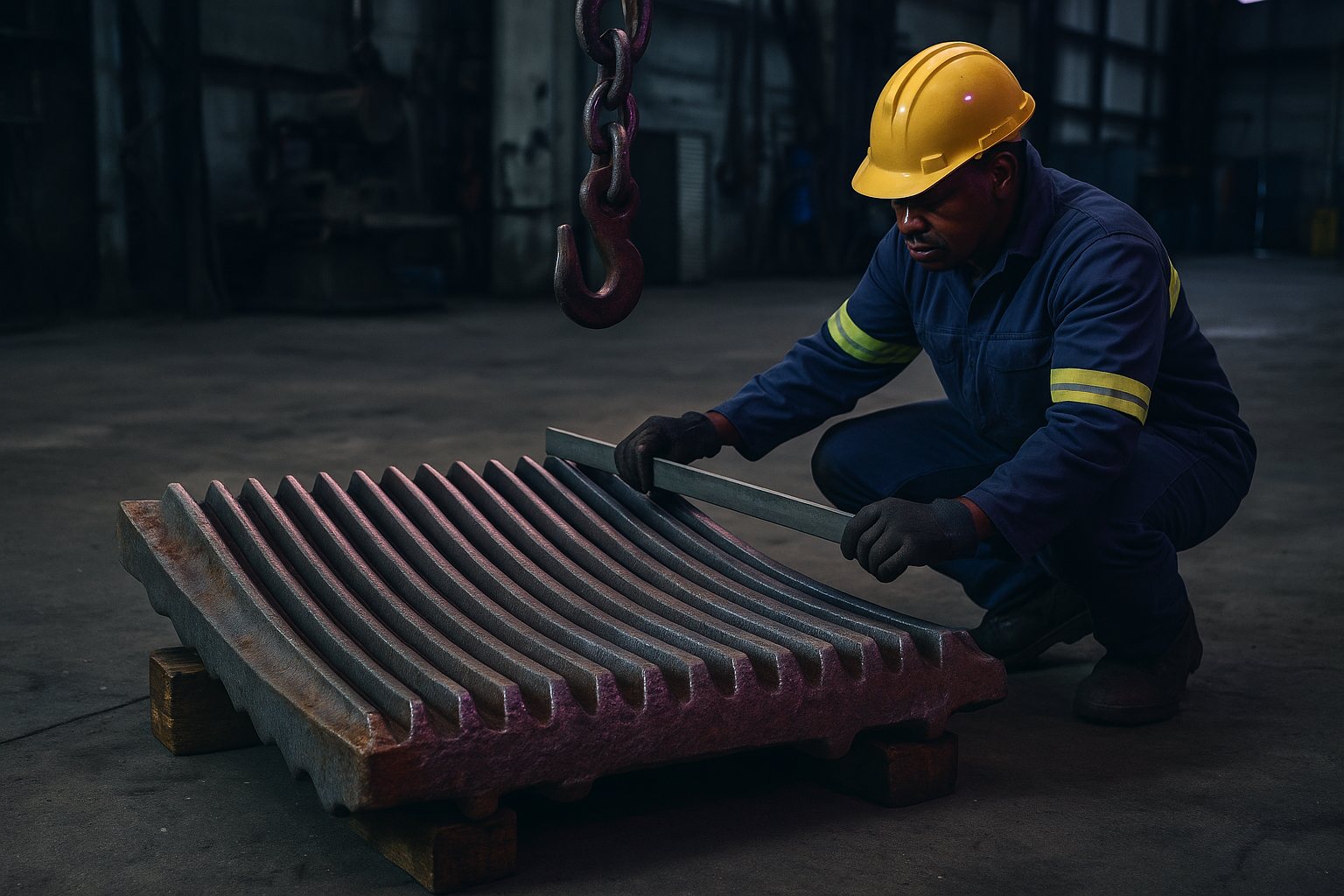
- Measure tooth height at the bottom, middle and top with a straight edge and a steel rule
- Turn when the bottom teeth have lost roughly half their height, not when they are gone
- Check the closed side setting before and after, and write both numbers down
- Photograph the plate from the same spot every time so wear is easy to compare
- Look at the cheek plates while you are in there, they wear in the same zone
The straight edge is the important part. A plate can look fine from the walkway and still be badly dished in the middle. Lay the edge across the tooth tips and the gaps tell you the truth quicker than any eye.
The turn itself
Treat it like a proper liner change, not a quick job between loads. Lock out, clear the chamber, and get the right lifting gear on site before the plates come loose. Inspect the backing surface on the frame and the swing jaw while its exposed. Old wedges, damaged seats or caked fines behind the plate will stop the turned die from bedding down properly, and a plate that moves will crack.
Use new wedge bolts if the old ones are stretched or the threads are rough. We keep wedge and bolt kits at Sunnyrock for most common jaws because this is exactly where people try save a few rand and end up with a loose plate two weeks later. Torque to the OEM figure, run the jaw empty for a few minutes, stop and re-check. Then check again after the first full shift.
When turning is the wrong call
Not every plate should be turned. Asymmetrical profiles, some heavy duty dies and plates with a different tooth pattern top and bottom are made to run one way only. If a plate has a crack running through the casting, retire it, dont turn it. And if the swing jaw and fixed jaw dies have worn very unevenly, turning only one side can leave you with a chamber that doesnt match, which brings its own problems.
If you are not sure, send us a photo with a rule in the frame and the plate part number. We will tell you honestly whether its a turn or a replace, even if the answer means we sell you nothing this month.
Related parts: Jaw Plate Set and Cheek Plate Pair. You can also read our primary jaw quarry guide or browse all wear notes.
What our Crusher Wear Parts customers say
Verified Google reviews